



You spot the space. It looks just wide enough until the car behind you starts honking, pedestrians pause to watch, and your confidence disappears. Whether it’s a tight parallel spot on a busy street or a cramped mall parking bay, parking has a unique way of turning even calm drivers into anxious ones. In fact, minor parking-related scrapes and low-speed collisions are among the most common causes of everyday vehicle damage, often occurring not on the road but at a standstill.
Parking is a universal driving challenge. It demands precision, awareness, and calm decision-making, yet many drivers are expected to master it with minimal guidance. While modern vehicles now offer sensors, cameras, and smart parking systems, technology alone doesn’t eliminate stress without the right skills to support it. That’s why this guide takes a complete approach, blending proven parking techniques with today’s most effective parking assistance technologies to help drivers take control of any situation.
By the end of this guide, you’ll know how to park with confidence instead of hesitation. You’ll reduce stress in high-pressure environments, protect your vehicle from costly damage, and handle everything from narrow city streets to crowded parking lots with ease. Whether you’re refining core skills or upgrading with smart solutions, this pillar page is designed to transform parking from a daily frustration into a smooth, confident part of your driving experience.
The Universal Challenge of Parking
Parking may seem like a basic driving task, but for many drivers, it’s one of the most stressful parts of the journey. Unlike open-road driving, parking requires precise control in confined spaces, often under pressure from surrounding traffic or onlookers.
Why Parking Is Difficult
Several factors combine to make parking challenging for drivers of all experience levels:
- Tight and inconsistent parking spaces, especially in urban areas
- Limited spatial awareness, making it hard to judge distance and angles
- Restricted visibility, particularly in larger vehicles
- Fear of vehicle damage, such as scratches, dents, or bumper impacts
- Social pressure, including impatient drivers waiting behind you
These anxieties often cause hesitation or rushed decisions, both of which increase the likelihood of mistakes.
The Impact of Poor Parking
Struggling with parking doesn’t just affect confidence; it has real consequences:
- Minor collisions and cosmetic damage that lead to costly repairs
- Parking fines or penalties for improper alignment or restricted areas
- Increased mental stress can carry over into overall driving performance
Over time, repeated negative parking experiences can lead drivers to avoid certain locations altogether, limiting their convenience and freedom.
Mastering Essential Parking Skills
Before technology can enhance parking, strong fundamentals must be in place. This section focuses on the core driving techniques that form the foundation of confident, controlled parking regardless of whether sensors or cameras are available.
Developing these skills ensures you remain capable and calm in any vehicle, including older models or unfamiliar cars.
Understanding Your Vehicle’s Dimensions
One of the most overlooked aspects of parking confidence is knowing exactly where your vehicle begins and ends.
Expert Tip: Use Visual Reference Points
Instead of guessing distances, train yourself to rely on consistent reference points:
- Side mirrors to judge distance from curbs, lines, or adjacent vehicles
- Dashboard alignment to estimate front clearance
- Mirror edge positioning to understand wheel placement
Practicing with these reference points builds muscle memory, allowing you to park accurately without constant overcorrection.
Parallel Parking: The Classic Maneuver
Parallel parking remains one of the most intimidating parking techniques, yet it’s also one of the most valuable skills for city driving. explore more Master the Art of Parallel Parking: Your Ultimate Step-by-Step How-To Guide
Key Techniques for Successful Parallel Parking
- Controlled steering wheel turns rather than rapid movements
- Consistent mirror checks to track curb distance and rear clearance
- Accurate gap judgment, ensuring enough space before committing
Smooth, slow inputs are far more effective than quick corrections.
Common Mistakes and How to Avoid Them
- Oversteering: Turn the wheel gradually and pause to assess alignment
- Misjudging the gap: Choose a space at least one and a half car lengths
- Hitting the curb: Use mirror reference points to monitor wheel proximity
With practice and a repeatable method, parallel parking becomes a predictable process rather than a stressful gamble.
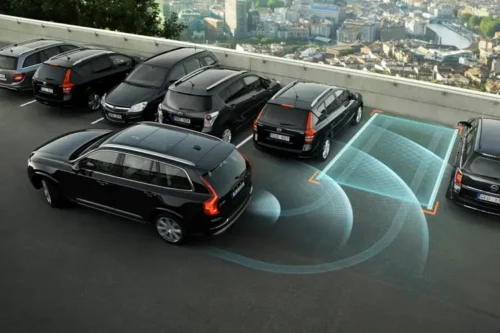
Parallel Parking
Perpendicular Parking: Front-In and Reverse-In
Perpendicular parking commonly found in shopping centers, office complexes, and residential areas may appear straightforward, but an improper approach or alignment can quickly turn it into a frustrating experience.
Front-In Strategy
Front-in parking is often the most instinctive method, but success depends on setup rather than speed.
Key Steps:
- Align early: Position your vehicle slightly wider than the parking space before turning.
- Turn smoothly: Begin steering once your front bumper clears the adjacent vehicle.
- Straighten promptly: Unwind the steering wheel as soon as the car aligns with the space.
Rushing the turn or cutting in too early is the most common cause of crooked parking.
Reverse-In Advantage
Reverse-in parking requires more initial attention but offers significant long-term benefits.
Why Reverse-In Parking Is Often Better:
- Improved visibility when exiting, reducing blind spots
- Easier steering corrections due to front-wheel control
- Lower risk of reversing into pedestrians or passing vehicles
Drivers who frequently park in busy areas often find reverse-parking faster and safer once the technique is mastered.
Angle Parking: Simple Yet Tricky
Angle parking is designed for quick entry, but it still demands awareness and control, especially in tight or high-traffic areas.
Approach and Execution
- Identify the angle of the space before turning
- Signal early to alert surrounding traffic
- Use smooth, continuous steering rather than abrupt movements
Let the angle of the space guide your turn instead of forcing the vehicle into position.
Tips for Tight Angle Spots
- Approach slightly wider to create a cleaner entry line
- Check both side mirrors to ensure equal spacing
- Make small corrections early to avoid last-second oversteering
Controlled entry prevents the need for repeated adjustments.
Advanced Parking Tips for Everyday Driving
Once the basics are mastered, certain real-world situations demand extra awareness and preparation.
Parking on Hills
Improper hill parking can cause vehicle movement and damage.
Best Practices:
- Turn wheels toward the curb when downhill, away when uphill
- Always engage the parking brake
- Allow the vehicle to rest against the curb gently when applicable
Parking in Crowded Lots
Busy parking areas require patience more than precision.
Smart Strategies:
- Look for spaces near the lot exits for easier departure
- Follow pedestrians, as they often lead to vacated spots
- Move slowly and expect sudden stops from other drivers
Parking with a Trailer or RV
Larger vehicles introduce additional challenges.
Basic Considerations:
- Choose pull-through or oversized spaces whenever possible
- Allow extra turning radius and stopping distance
- Perform a walk-around check before and after parking
When space is limited, having a spotter greatly reduces risk.
Understanding Parking Assistance Technology
While strong parking skills form the foundation of confident driving, modern parking assistance technologies act as powerful support systems. Designed to enhance awareness and reduce human error, these tools help drivers navigate tight spaces more safely and efficiently, especially in high-pressure or low-visibility environments.
Rather than replacing driver judgment, effective parking technology augments decision-making, providing real-time feedback that reduces uncertainty and risk.
The Evolution of Parking Assistance
From Simple Mirrors to Smart Systems
Parking assistance has evolved dramatically over the years. What began with basic rear-view and side mirrors has expanded into a network of sensors, cameras, and intelligent software working together.
- Early vehicles relied entirely on visual judgment
- Rear parking sensors introduced audible distance alerts
- Cameras added visual confirmation
- Advanced Driver Assistance Systems (ADAS) now combine radar, cameras, and software logic
This evolution reflects a growing focus on preventing low-speed accidents, which are among the most common and costly incidents for drivers.
Research-Based Insight
Insurance and road safety studies consistently show that vehicles equipped with parking assistance technologies, particularly rearview cameras and cross-traffic alerts,s experience fewer low-speed collisions and back-over incidents, leading to reduced insurance claims and repair costs. These findings are a major reason why rear cameras are now mandated in many markets.
Types of Parking Sensors: Your Digital Eyes
Parking sensors function as an extension of your spatial awareness, detecting obstacles that may be difficult or impossible to see from the driver’s seat. The Ultimate Guide to Parking Sensors Types, Benefits, and Choosing the Right System for Stress-Free Driving
All sensor systems are built on established automotive engineering principles, but they differ in detection method, accuracy, and ideal use cases.
Ultrasonic Parking Sensors
How They Work
Ultrasonic sensors emit high-frequency sound waves. When these waves hit an object, they bounce back to the sensor. The system calculates distance based on the time it takes for the echo to return.
- Cost-effective and widely available
- Highly accurate at short distances
- Ideal for urban and everyday parking scenarios
- Performance may be reduced by dirt, ice, or heavy rain
- Small blind spots can exist between sensor placements
Electromagnetic Parking Sensors
How They Work
Electromagnetic systems create a field along the bumper. When an object disrupts this field, the system detects its presence.
- Invisible installation with no drilling required
- Continuous detection across the bumper surface
- Clean, factory-like appearance
- Shorter effective detection range
- Can react to nearby metallic objects
Radar-Based Parking Systems (Advanced ADAS Integration)
How They Work
Radar-based systems use radio waves to detect objects at greater distances, often working alongside cameras and software algorithms.
- Excellent for cross-traffic detection
- Performs well in poor lighting and weather
- Integrated with advanced safety features
- Higher cost and greater system complexity
- Typically factory-installed rather than aftermarket
Beyond Sensors: Other Smart Parking Solutions
Modern vehicles increasingly rely on integrated systems, designed according to manufacturer specifications and global safety standards, to deliver a seamless parking experience.
Rear view Cameras
Benefits
- Eliminates blind spots directly behind the vehicle
- Provides visual clarity in tight or crowded areas
- Reduces the risk of back-over accidents
Regulations and Features
Rear view cameras are now mandatory in many regions. Common features include:
- Dynamic gridlines
- Predicted trajectory lines
- Low-light enhancement
360-Degree Cameras (Surround View Systems)
How They Work
Multiple cameras mounted around the vehicle create a stitched, overhead “bird’s-eye” view, allowing drivers to see all sides simultaneously.
Pros
- Comprehensive situational awareness
- Extremely helpful for tight or high-end parking spaces
- Reduces reliance on guesswork
Example
Vehicles such as the Toyota Land Cruiser, BMW X5, and Nissan Rogue are well-known for offering highly refined 360-degree camera systems.
Automated Parking Systems (Park Assist)
Levels of Automation
- Semi-autonomous: System controls steering; driver manages braking and speed
- Fully autonomous: System controls steering, braking, and acceleration
How They Work
These systems use a combination of sensors and cameras to identify suitable spaces and guide the vehicle into position.
Pros & Cons
Pros:
- Convenience in tight or complex parking situations
Cons:
- Slower than manual parking
- Requires trust in system accuracy
Cross-Traffic Alert Systems
Functionality
Alerts drivers to approaching vehicles when reversing out of a parking space, often using radar-based detection.
Importance
This feature is critical in busy parking lots where visibility is limited and moving traffic is unpredictable.
Blind Spot Monitoring
While commonly associated with lane changes, blind spot monitoring is especially useful when maneuvering in congested parking environments before entering or exiting a space.
Choosing the Right Parking Assistance System
With so many parking assistance options available, choosing the right system can feel overwhelming. The key is understanding your driving environment, vehicle compatibility, and personal comfort level with technology. The best solution is not always the most advanced; it’s the one that fits your needs consistently and reliably.
This section breaks down the decision-making process so you can invest in a system that genuinely improves your parking experience.
Factors to Consider When Buying
Vehicle Type and Age
Not all parking systems integrate seamlessly with every vehicle.
- Older vehicles may require aftermarket sensor or camera kits
- Newer vehicles may already support OEM or ADAS integration
- Larger vehicles (SUVs, vans) benefit from wider detection coverage
Always confirm compatibility before purchasing.
Budget
Parking assistance systems vary widely in cost:
- Basic ultrasonic sensor kits are generally the most affordable
- Camera systems add visual clarity at a moderate price
- Advanced ADAS or automated parking systems come at a premium
Factor in installation costs, which may equal or exceed the price of the hardware itself.
Desired Features
Clarify what level of assistance you actually need:
- Audible alerts only for simple guidance
- Visual displays for distance and alignment
- Automated steering or full park assist for high-density environments
More features don’t always mean better usability; simplicity often improves confidence.
Installation Preference
- DIY kits are suitable for technically confident drivers
- Professional installation ensures proper calibration and system reliability
Incorrect installation can compromise accuracy and safety.
Aesthetics
Visual impact matters to many drivers:
- Visible sensors offer clear functionality but alter bumper appearance
- Hidden electromagnetic systems preserve factory aesthetics
Choose a solution that aligns with both function and design preference.
Product Spotlights and Recommendations
Choosing the right parking assistance system becomes easier when you can evaluate a proven solution in real-world terms. This section highlights a well-regarded system and explains who it’s best for, what it offers, and how to install it correctly
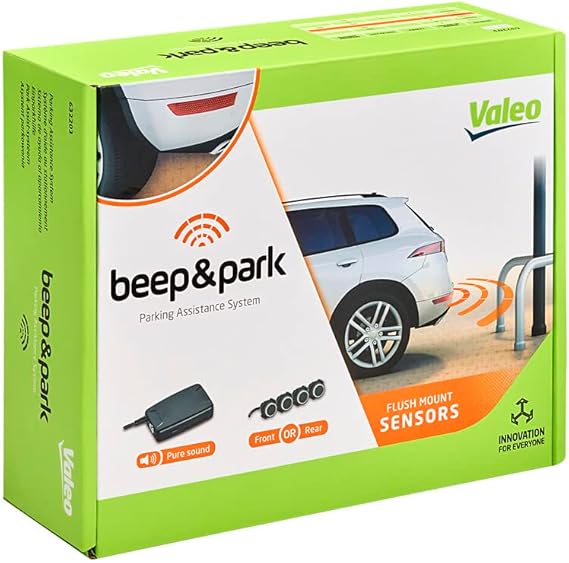
VALEO Beep&Park Parking Assistance System
8 Sensors with LCD Display - Front & Rear Installation
VALEO is a globally recognized automotive supplier known for manufacturing OEM-grade electronics for major car brands. The Beep&Park Parking Assistance System reflects that pedigree, offering a balanced mix of accuracy, usability, and reliability.
Key Features and Benefits
- Front and rear sensor coverage, reducing blind spots during low-speed maneuvers
- Eight ultrasonic sensors for improved obstacle detection consistency
- LCD, providing clear visual distance feedback alongside audible alerts
- OEM-style performance, suitable for both city and residential driving environments
The system is designed to assist rather than overwhelm, delivering clear warnings without unnecessary complexity.
Best Use Case
This system is especially well-suited for:
- Drivers who regularly park in tight urban environments
- Owners of sedans, hatchbacks, and mid-size SUVs
- Drivers seeking visual confirmation rather than audio alerts alone
- Vehicles without factory-installed parking assistance
It’s a strong option for those looking to upgrade safety and confidence without stepping into fully automated systems.
Recommended Tools & Accessories for Reliable Installation
Whether installing yourself or supporting professional work, quality tools matter. Trusted brands in automotive electronics often include:
- Wiring kits with heat-shrink connectors for secure electrical connections
- Trim removal tools to prevent interior damage
- Multimeters or diagnostic testers for voltage and signal verification
Using reliable tools ensures sensor accuracy and long-term system stability.
DIY vs. Professional Installation
Once a system is selected, installation becomes the next critical decision. Both approaches have advantages choosing the right one depends on skill level, time, and risk tolerance. How to Install Parking Sensors in Your Car: The Ultimate DIY Guide, Best Kits & Expert Tips
The DIY Approach
- Lower overall cost
- Personal satisfaction and learning experience
- Flexible timing
- Requires technical confidence and attention to detail
- Risk of wiring errors or improper sensor alignment
- No professional warranty on workmanship
Preparation Essentials
- Review wiring diagrams carefully
- Gather all tools before starting
- Test the system thoroughly before final reassembly
DIY installation is best suited for drivers with prior automotive or electrical experience.
Professional Installation.
- Expert calibration and placement
- Clean, factory-like finish
- Warranty on installation work
- Higher upfront cost
- Scheduling required
What to Expect
- Initial consultation to assess compatibility
- Sensor placement and wiring integration
- System testing and user demonstration
For many drivers, professional installation provides peace of mind and ensures optimal performance from day one.
DIY vs. Professional Parking Sensor Installation: A Practical Comparison
Choosing between DIY and professional installation is a critical decision that affects not only performance but also safety, reliability, and long-term satisfaction. The table below compares both options based on real-world installation requirements, common risks, and industry-standard practices.
Table: DIY vs. Professional Parking Sensor Installation
|
Feature |
DIY Installation |
Professional Installation |
|
Cost |
Lower (parts only) |
Higher (parts + labor) |
|
Skill Level Required |
Moderate to High (electrical wiring, drilling, trim removal) |
None (installer handles everything) |
|
Time Investment |
Significant (several hours to a full day) |
Minimal (vehicle drop-off and pick-up) |
|
Tools Needed |
Drill, wire strippers, multimeter, trim removal tools |
Specialized workshop tools, diagnostic equipment |
|
Warranty / Support |
None (DIY risk assumed by owner) |
Often includes labor warranty and post-install support |
|
Integration Quality |
Can be challenging to achieve seamless integration |
Seamless integration with vehicle electronics and aesthetics |
|
Risk of Error |
Higher (potential for wiring faults, sensor misalignment, vehicle damage) |
Lower (performed by trained technicians) |
Expert Guidance: Making the Right Installation Choice
When DIY Installation Makes Sense
DIY installation can be a viable option only if the driver:
- Has prior experience with automotive electrical systems
- Understands vehicle wiring diagrams
- Is comfortable with drilling bumpers and removing interior trim
- Has access to proper tools and a controlled workspace
Safety Precautions for DIY Installers
- Always disconnect the battery before electrical work
- Double-check sensor placement measurements before drilling
- Use proper insulation and grounding to prevent shorts
- Test the system fully before reassembling panels
Skipping these precautions is the most common cause of faulty sensor operation and electrical issues.
When Professional Installation Is the Better Choice
Professional installation is strongly recommended for:
- Newer vehicles with complex electronic systems
- Drivers without electrical or mechanical experience
- Anyone seeking OEM-level finish and reliability
- Vehicles still under manufacturer warranty
Experienced installers use calibrated diagnostic tools and follow manufacturer guidelines, significantly reducing the risk of malfunction or damage.
Bottom Line
DIY installation offers cost savings but comes with higher responsibility and risk. Professional installation costs more upfront but delivers accuracy, safety, warranty coverage, and peace of mind.
For most drivers, especially those new to parking assistance technology, professional installation remains the safest and most reliable option.
Maximizing Your Parking Confidence
True parking confidence comes from balance, not relying solely on technology, and not ignoring it either. When practical driving skills are reinforced with intelligent parking assistance systems, drivers gain clarity, control, and calm in even the most demanding situations.
This section brings everything together, helping you turn knowledge into consistent, real-world confidence.
Combining Skills and Technology for Ultimate Confidence
The Synergistic Approach
Parking assistance systems are most effective when they support well-practiced techniques, not replace them. Sensors and cameras act as an extra set of eyes, confirming what skilled drivers already anticipate through mirror use and spatial judgment.
Technology reduces uncertainty, but decision-making remains firmly in the driver’s hands.
Developing Muscle Memory with Parking Aids
Parking technology can actively improve driver ability over time:
- Audible alerts help calibrate distance judgment
- Visual displays reinforce alignment awareness
- Repeated use builds consistent spatial reference points
By paying attention to alerts and visual cues during each maneuver, drivers gradually develop muscle memory, making accurate parking possible even when technology is unavailable.
Maintenance and Care for Your Parking Systems
Parking assistance systems require basic care to remain accurate and dependable.
Cleaning Sensors and Cameras
- Regularly wipe sensors and camera lenses
- Remove dirt, road grime, snow, and ice
- Avoid harsh chemicals that may damage coatings
Even a thin layer of debris can significantly affect detection accuracy.
Troubleshooting Common Issues
Some common concerns include:
- False alarms: Often caused by dirt buildup or misaligned sensors
- Intermittent malfunctions: May result from loose wiring or moisture intrusion
When issues persist, a professional diagnostic check is recommended to ensure system reliability.
Software Updates
For vehicles with advanced driver assistance features:
- Keep system software up to date
- Follow manufacturer update schedules
- Updates often improve accuracy, compatibility, and safety performance
Outdated software can reduce system effectiveness.
The Future of Parking Technology
Parking technology continues to evolve, aiming to reduce congestion, improve safety, and eliminate uncertainty.
Autonomous Valet Parking
Emerging systems allow vehicles to drop off passengers and park themselves without a driver inside. These technologies rely on advanced sensors, cameras, and vehicle-to-infrastructure coordination.
V2X Communication (Vehicle-to-Everything)
V2X enables vehicles to communicate with parking garages, road infrastructure, and other cars, guiding drivers to available spaces and preventing low-speed collisions.
Smart City Parking Solutions
Smart cities are integrating:
- Real-time parking availability data
- App-based navigation to open spots
- Dynamic pricing to reduce congestion
These systems aim to reduce time spent searching for parking while lowering stress and emissions.
FAQ
Take Control of Your Parking Experience
Stress-free parking is not a matter of luck; it’s the result of mastering core skills and using technology wisely. From parallel and perpendicular techniques to angle parking and hill maneuvers, foundational driving skills remain essential. Complementing these abilities with sensors, cameras, and smart parking systems enhances awareness, reduces errors, and turns uncertainty into confidence.
The Promise of Confidence and Ease
Imagine pulling into any parking spot, whether it's a tight city street, a crowded mall, or a challenging garage space, without hesitation or anxiety. By combining practical skill development with modern technological aids, drivers gain peace of mind, minimize the risk of vehicle damage, and enjoy the act of parking rather than dreading it.
Your Next Step: Apply, Explore, Share
Take action today:
- Practice your skills: Use mirrors, reference points, and the techniques outlined to build consistent muscle memory.
- Explore technology: Identify sensors, cameras, or automated systems that complement your driving style and vehicle.
- Share your experience: Encourage friends and family to adopt these methods, helping to create a community of confident, capable drivers.
By applying both knowledge and technology, you’re not just parking, you’re transforming your driving experience.