




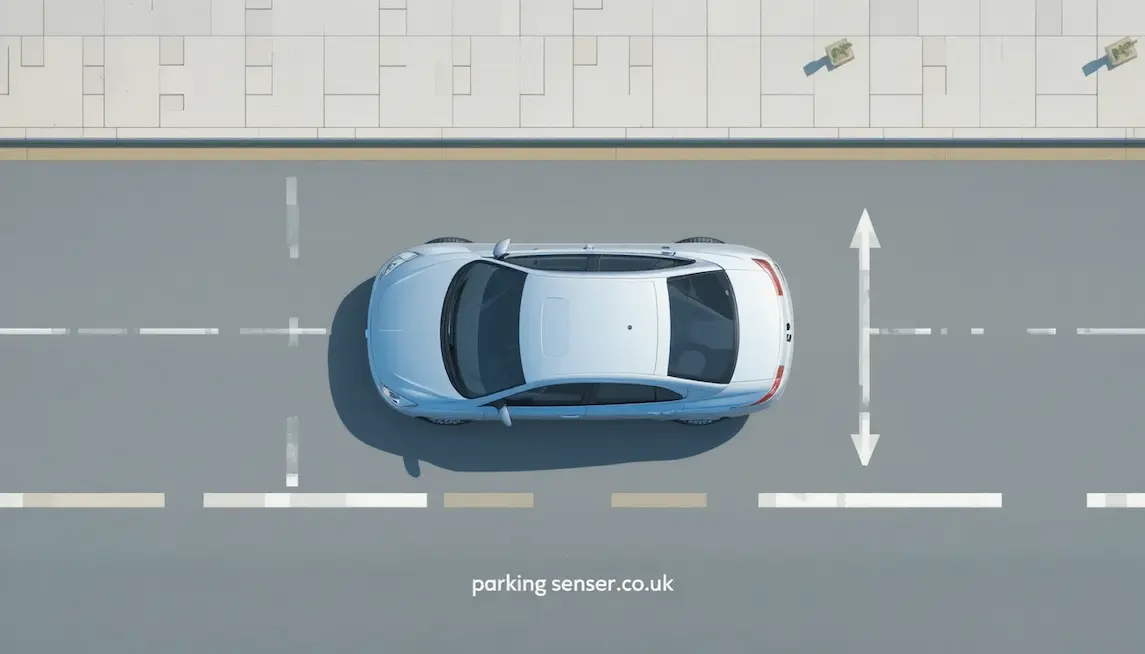
Parallel parking often feels like the ultimate driving test nemesis, a maneuver wrapped in mystery, pressure, and a whole lot of anxiety. If you find yourself circling the block for an easier spot, sweating at the thought of squeezing into a tight space, or feeling frustrated by inconsistent attempts, you're far from alone. Many drivers, even experienced ones, struggle with the fear of misjudging distance, scraping the curb, or appearing nervous under the gaze of others.
But imagine approaching every parallel parking situation with calm confidence, smoothly guiding your vehicle into place, even on busy city streets or narrow residential lanes. With the right method, this isn’t just possible; it’s achievable for every driver.
This comprehensive guide is designed to replace uncertainty with clarity. You’ll learn a simple, repeatable, and highly effective technique backed by certified driving instructors. Through clear step-by-step instructions, visual cues, confidence-building strategies, and real-world troubleshooting, you'll not only understand how to parallel park, but you'll also develop the spatial awareness and control to do it consistently and stress-free.
This guide is built using insights from certified driving instructors to ensure professional accuracy and practical usefulness.
The Foundation: Why Parallel Parking Is a Crucial Skill
Beyond the Driving Test: Real World Importance
- Navigating Urban Environments: In busy city areas where parking options are limited, parallel parking is often the only feasible choice.
- Efficiency and Convenience: Mastering this skill lets you utilize spaces that others avoid, saving time, energy, and frustration.
- Demonstrating Driving Competence: Confident parallel parking reflects strong vehicle control and boosts your overall driving confidence.
- Safety for All: Proper technique ensures you do not obstruct traffic, block visibility, or create hazards for pedestrians, cyclists, or other drivers.
Common Fears and How This Guide Eliminates Them
Difficulty Judging Distance From Other Cars and the Curb
Solution: Crystal clear reference points, mirror cues, and positioning techniques that remove guesswork.
Confusion About the Sequence of Steering and Gear Changes
A simple, step-by-step method that teaches when to steer, how much to turn, and how to control the vehicle smoothly.
Fear of Hitting Another Vehicle or Scraping the Wheels
Solution: Slow-paced movement, controlled reversing, and precise visual checkpoints that keep your car safe from contact.
Anxiety in Busy or Observed Situations
Solution: Mindset tips, confidence-building exercises, and practice strategies that help you stay calm even when others are watching.
Essential Preparations: Setting Up for Success
Before you even begin turning the wheel, your success in parallel parking depends heavily on your setup. Proper positioning, signaling, and situational awareness lay the foundation for a smooth, controlled, and safe maneuver. Think of this stage as establishing your winning angle, the part that removes guesswork and sets you up for a clean entry into the space.
Vehicle Positioning: The Starting Line
Selecting the Spot
Choose a parallel parking space that provides enough room for your vehicle to maneuver safely.
- A good benchmark: the spot should be at least 1.5 times the length of your car.
This ensures that even if your first angle isn’t perfect, you’ll still have enough space to adjust.
Pre Maneuver Alignment
Pull up alongside the car in front of your intended parking space. This alignment determines the trajectory of your entry.
One Car Length Advantage
Aim to stop your vehicle approximately one full car length ahead of the space.
This gives you the ideal angle and turning radius when you begin reversing, a subtle but powerful trick used by driving instructors to improve consistency.
Safe Distance
Maintain a lateral gap of 2-3 feet (roughly one arm’s length) between your car and the parked vehicle.
This spacing ensures:
- Room for your vehicle’s rear to swing in smoothly
- Enough space to turn sharply without clipping mirrors
- A safer, more controlled entry
Mirror & Signal Protocol: Safety First
Signaling Your Intentions
Activate your indicator early to notify drivers behind you of your intent to park. This simple action prevents misunderstandings and encourages traffic to slow down.
“Mirror, Signal, Maneuver”
Use this golden rule consistently, even while practicing.
Before moving to any stage:
- Mirror-Check side and rearview mirrors
- Signal-Indicate your intent
- Maneuver-Begin your action with confidence
Mirror Checks
Stay aware of everything happening around you:
- Use your rearview mirror to monitor approaching traffic
- Use your side mirrors to assess your distance from the curb and parked vehicles
- Maintain continuous awareness during the entire maneuver
Blind Spot Awareness
Just before reversing, perform a quick over-the-shoulder check.
This ensures you’re not missing pedestrians, cyclists, or vehicles that may slip into your blind spot, a critical component of safe and responsible driving.
Spatial Awareness & Surroundings Check
Observation Is Key
A successful parallel park depends as much on awareness as on technique. Before and during the maneuver, actively scan your environment to anticipate movement from pedestrians, cyclists, or vehicles.
Look Over Your Shoulder While Reversing
Mirrors are useful, but they don’t show the complete picture.
Physically turning to look out of your rear window gives you:
- A deeper sense of depth
- A clearer view of obstacles
- Better alignment during the initial reverse
This real-world habit is emphasized by driving instructors and is essential for credibility.
Mental Visualization
Before you begin turning the wheel, take a moment to mentally trace the arc your vehicle will follow. This simple technique improves spatial reasoning and reduces hesitation once you begin the maneuver.
The Core Maneuver: Your Step-by-Step Guide to Parallel Parking Mastery
This is the heart of the technique, a clear, structured sequence that removes the guesswork from parallel parking. Follow these steps slowly and deliberately, and you’ll build the muscle memory needed for consistent success.
Step 1: Aligning for the Turn
- Pull your vehicle up parallel to the car in front of the empty spot.
- Align your rear bumper with that vehicle’s rear bumper.
- Maintain 2-3 feet of lateral distance. This space allows your vehicle room to pivot.
- Shift into reverse gear and take a calming breath before continuing.
Step 2: The First Reversal & Key Reference Point
- Turn your steering wheel fully to the right (when parking on the right side of the road).
- Begin reversing very slowly, alternating between mirror checks and a physical look over your shoulder.
Continue reversing until:
- Your car is at roughly a 45-degree angle to the curb, or
- Your right-rear headlight aligns with the left rear headlight of the car behind the space.
Either cue works; choose what feels most intuitive.
Find Your Reference Points
Every car and driver is slightly different. Notice consistent visual cues such as:
- When your rear bumper lines up with specific points on nearby vehicles
- A corner of your window meets a landmark
These cues help you build repeatable accuracy.
Step 3: Straightening Up & Second Reference Point
- Once your vehicle reaches the 45-degree mark, straighten your wheels
- Continue reversing slowly and smoothly.
Reference Point
Stop when:
- Your left front headlight aligns with the right rear headlight of the car in front, or
- Your right side mirror aligns with the other vehicle’s bumper, or
- You can clearly see the corner of the front car in your left mirror, and your front bumper has cleared the vehicle behind you.
Use the reference that feels most natural; all are valid.
Step 4: Final Adjustment & Curb Proximity
- Turn your steering wheel fully to the left.
- Continue reversing slowly until your vehicle becomes parallel to the curb.
- Shift into drive, make small forward corrections, and gently center your vehicle within the parking space.
Your ideal finishing position:
- Parallel to the curb
- Close enough without touching it (typically 6–12 inches)
- Centered between the vehicles in front and behind
The Pull Out: Exiting Safely
Parallel parking doesn’t end when you enter the space — exiting cleanly is just as important.
Don’t Fear the Pull Out
Many drivers worry about scraping the car in front when leaving. With slow speed, proper signaling, and mirror checks, pulling out is safe and predictable. Practice this step as much as the initial park.
Steps for Exiting
- Signal your intention to leave the space.
- Check all mirrors and perform a shoulder check for blind spots.
- If needed, reverse slightly to create space from the car in front.
- Turn your steering wheel fully toward the lane (usually left).
- Pull out slowly and merge into traffic once it’s clearly safe.
These steps reflect guidance from certified driving instructors and align with official manuals from government licensing agencies, ensuring safety, accuracy, and instructional credibility.
Visualizing Success: Diagrams, Videos & Interactive Practice
Mastering parallel parking becomes dramatically easier when you can see the maneuver from multiple angles. Visual tools reinforce muscle memory, clarify reference points, and build confidence, especially for learners who benefit from step-by-step demonstrations. This section outlines the ideal visual and interactive elements to support real-world skill development.
Comprehensive Video Demonstration
A high-quality video is one of the most effective learning tools for parallel parking.
- A complete walkthrough of the entire maneuver, from selecting a space to final positioning.
- Professional narration explaining each movement in clear, simple language.
- On-screen text overlays that highlight key reference points (e.g., steering cues, alignment markers).
- Close-up shots of the steering wheel to remove all ambiguity.
- Helps learners observe pacing, speed control, and body posture during reversing.
Consideration
Video demonstrations instantly convey hands-on expertise and reinforce accuracy by showing the maneuver in real time. This visual evidence significantly boosts trustworthiness and instructional authority..
Step-by-Step Diagrams for Clarity
Static diagrams serve as quick reference learning tools, ideal for reinforcing the sequence of movements.
- A series of clear, simple diagrams that illustrate each major phase of the maneuver.
- Visual focus on:
- Vehicle positioning
- Steering wheel direction
- Curb proximity
- Key visual reference points
- Especially useful for learners who prefer visual checkpoints over verbal instructions.
Unique Content Element: Interactive Parking Challenge (Quiz / GIFs)
This is a standout feature that elevates the learning experience and sets your guide apart from typical tutorials.
Differentiation Opportunity
Offer an interactive practice tool, either animated GIFs or a lightweight click-based quiz, to help users test their understanding in a fun, engaging way.
Concept Overview
- Present a real-life parking scenario (top-down view).
- Ask the user:
- “What should you do next? Steer Right / Steer Straight / Steer Left?”
- When they choose an answer, a short GIF plays showing the immediate result of that choice.
- Learners experience instant visual feedback, reinforcing correct decisions and revealing common mistakes without real-world risk.
This gamified approach helps drivers internalize the maneuver through trial and error, increasing retention dramatically.
Troubleshooting & Recovery: Common Mistakes and How to Fix Them
Even with clear steps, parallel parking can occasionally go off track, and that’s completely normal. What matters most is knowing how to correct the mistake calmly and safely. This section walks you through the most common errors and offers simple, precise recovery techniques that driving instructors rely on.
1. Too Far from the Curb
Problem
Your vehicle ends up sitting too far away from the curb when the maneuver is complete, leaving you positioned awkwardly or extending into the road.
Fix
- Pull forward slightly.
- Turn your wheel fully to the right (when parking on the right side).
- Reverse very slowly while watching your right mirror.
- Straighten the wheels as you get closer to the curb.
This smooth “micro adjustment” pulls the rear of your car closer without redoing the whole maneuver.
The “Slight Correction” Rule
Make small corrections immediately when you notice drifting off course. The earlier you adjust, the cleaner and safer your final position will be.
2. Too Close to the Car in Front or Behind
Problem
You’ve parked too tightly, resulting in limited room to exit the spot or inadvertently blocking another vehicle.
Fix
- Gently move forward or backward to create safe spacing.
- Aim for at least one car length of clearance split between the front and back when possible.
Even small forward or backward adjustments can create enough space to safely pull out later.
3. Hitting the Curb
Problem
Your wheels brush, bump, or mount the curb during the maneuver — one of the most common beginner mistakes.
Fix
- Shift into drive.
- Turn your wheel fully left to move the front of your car away from the curb.
- Pull forward slightly to clear space.
- Then shift back into reverse and gently angle the car in again by turning the wheel right.
This controlled sequence helps you regain the correct approach without damaging your wheels.
4. Misjudging the Angle
Problem
Your car ends up crooked, either too shallow (sticking out) or too deep (angled toward the curb).
Fix
- If you’re too shallow:
- Shift into drive
- Pull forward slowly
- Restart from Step 1 or recreate the correct angle by aligning again with the front vehicle
- If you’re too deep:
- Make a slight forward adjustment with the wheel turned left
- Then reverse again with the wheel turned right
These small adjustments realign your vehicle into a proper parallel position without starting from scratch.
Master Parallel Parking: Complete Practice System
Interactive troubleshooting, confidence-building exercises, and expert practice strategies
Interactive Troubleshooting Flowchart
Select the issue you're facing below, and get step-by-step solutions with visual demonstrations
Too Far From Curb
Your car is parked too far from the sidewalk, blocking traffic
Hit the Curb
Your wheels made contact with or scraped against the curb
Too Shallow Angle
Not angled enough to fit into the space properly
Too Deep Angle
Angled too sharply, hitting the car behind
Uneven Positioning
Car is crooked or not parallel to the curb
Parking Anxiety
Nervousness affecting your performance
Setting Up Your Practice Zone
Follow these steps to create a safe, effective practice environment:
Choose a Safe Area
Select an empty parking lot or quiet residential street with minimal traffic. This provides a low-pressure environment ideal for focused practice.
Expert Tip
Early morning or late evening on weekends are ideal times for low-traffic practice.
Create Simulated Space
Use traffic cones, small boxes, or collapsible markers to build a practice "parking spot" that replicates real-world dimensions (approx. 6 feet longer than your car).
Product Tip
Collapsible traffic cones are highly recommended—they offer visual boundaries without risking damage to your car.
Start Easy, Then Progress
Begin with a larger space (8-10 feet longer than your car) to build confidence. Gradually narrow the simulated spot as your precision improves.
Learning Strategy
Master 3 successful parks in a row before reducing space size by 1 foot.
Overcoming Parallel Parking Anxiety
Mindfulness techniques and confidence-building strategies for nervous drivers
Pre-Parking Calming Exercise
Use this 30-second breathing routine before attempting to park:
Breathe in for 4 seconds → Hold for 4 seconds → Breathe out for 6 seconds → Repeat 3 times
Positive Affirmations
Replace discouraging thoughts with these confidence-building statements:
"I'm improving every time I practice"
"I can handle this at my own pace"
"Mistakes are part of learning"
"I am in control of this vehicle"
Post-Mistake Reset Routine
Use this 5-step routine if you make a mistake during practice:
- Pause: Stop the car completely
- Breathe: Take 3 deep breaths
- Assess: Identify what went wrong
- Visualize: Picture the correct movement
- Reset: Pull out and start fresh
Targeted Practice Drills
Master One Step at a Time
Break the parallel parking sequence into small parts and practice each step separately:
- Alignment Drill: Practice positioning 2 feet from parked car
- Steering Drill: Practice turning wheel while stationary
- Straightening Drill: Practice aligning with curb
Practice Both Sides
If you normally park on the right side, intentionally practice left side parallel parking as well.
Expert Tip
Left-side practice challenges your spatial awareness and improves overall skill. Start with 20% wider spaces when learning the opposite side.
Visualize the Arc
Before you steer, mentally picture the exact path your car will follow while turning.
Expert Tip
This visualization sharpens spatial reasoning and reduces hesitation. Practice this mental exercise even when you're not driving.
Practice Schedule Recommendation
Short & Regular: 10-15 minutes, 3 times per week builds muscle memory more effectively than 1-hour weekly sessions.
Progression: Start with 10 successful parks in easy mode, then gradually increase difficulty.
Advanced Scenarios & Real World Adaptations
Parallel parking doesn’t always happen in ideal, flat, wide-open spaces. Real-world conditions hills, tight urban streets, oversized vehicles, or advanced car technology, can dramatically change how you approach the maneuver. By learning how to adapt to these situations, you’ll boost both your confidence and consistency. Think of this section as your “next level” guide to mastering parallel parking anywhere.
Parking on Hills: Uphill & Downhill Techniques
Parking safely on an incline is essential, not just for passing driving tests but for protecting your vehicle from rolling.
Uphill Parking
- Turn wheels left (away from the curb).
- Shift to neutral briefly and let the car roll back until the front tire gently touches the curb.
- Apply the parking brake
Downhill Parking
- Turn wheels right (toward the curb).
- Shift to neutral and let the car roll forward slightly.
- Set the parking brake
Why It Matters
Your wheel position creates a “fail-safe.” If the brakes give out, the curb stops your vehicle instead of letting it roll downhill.
Tight Spaces & Irregular Spots
Urban driving often means squeezing into imperfect, non-textbook spaces. Here’s how to adapt:
1. Measure the Space Quickly
A practical rule: The spot should be at least 1.5 times the length of your car. If it’s shorter, you risk getting stuck or scraping another vehicle.
2. Use Micro Movements
In tight spaces, tiny steering corrections are your best friend. Move inches at a time, staying slow and controlled.
3. Maximize the Space You Have
Sometimes you need to use every available inch:
- Pull as close as safely possible to the vehicle ahead when starting.
- Utilize the full steering lock when turning.
- Don't hesitate to reposition—professionals do this all the time.
Different Vehicle Types (SUVs, Compacts, Trucks, etc.)
Every car behaves differently. Understanding your vehicle’s structure helps you adapt instantly.
Larger Vehicles (SUVs, Trucks)
- Require wider turning arcs.
- Have higher seating, giving you better visibility but a longer rear overhang.
- Adjust your reference points; the pivot point is farther from the rear.
- Fit into smaller spaces easily.
- But don’t rely on size alone; precision still matters.
- Watch your mirrors carefully; short cars can make distances look deceptively large.
Parallel Parking for Every Car & City
Whether you drive an SUV in Karachi or a compact car in Lahore, adapting your angles and reference points ensures smoother, faster parking in any urban environment.
Leveraging Technology for Easier Parking
Modern vehicles come with tools that make parallel parking significantly easier. Think of them as confidence boosters, not crutches.
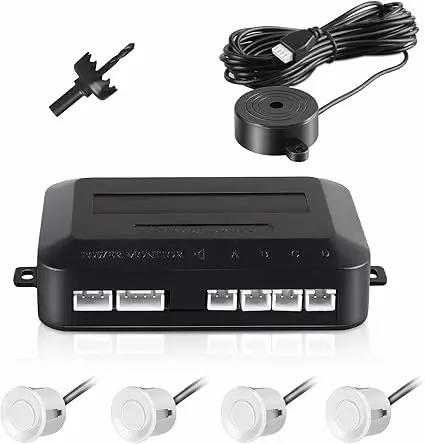
Parking Sensors: How They Work & Why They Help
How They Work
Ultrasonic sensors emit sound waves that bounce off nearby objects, sending distance alerts through beeps or dashboard visuals.
Benefits
- Help you judge proximity to the curb or another vehicle.
- Provide reassurance during tight maneuvers.
- Reduce anxiety by giving real-time feedback.
Product Recommendation: Front & Rear Parking Sensors to improve spatial awareness instantly.
Smart Parking Assist Systems
How They Work
These systems can actually steer the vehicle for you into a parallel spot. You control the brake, accelerator, and gear changes; your car handles the steering.
Driver Advantage
- Perfect for narrow roads or high-stress environments.
- Reduces the mental load while you focus on safety.
Product Recommendation: Parking Assist Systems (if your car supports them).

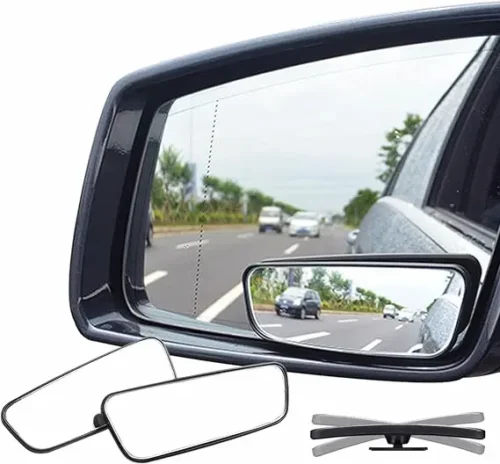
Blind Spot Monitors
These systems alert you when another vehicle is lurking in your blind spot, especially important when pulling out of a parallel spot into traffic.
Product Recommendation: Blind Spot Monitors for safe merging and exiting.
Differentiation Opportunity: Using Advanced ADAS Features to Your Advantage
Beyond basic sensors, modern Advanced Driver Assistance Systems (ADAS) offer an intelligent parking aid:
- Digital mirrors that reduce distortion at night.
- Automatic curb view modes that activate when reversing.
- Self-parking modules that scan and select feasible spots for you.
Teaching users how to use these tools effectively positions your guide as both modern and user empowering.
Real Stories of Success: Building Relatability & Motivation
Mastering parallel parking isn’t just about technique; it’s about mindset, patience, and steady progress. Real learners, just like you, have overcome the same struggles. Their stories serve as powerful reminders that with the right strategies, anyone can master this skill.
Learner Testimonials & Mini Case Studies
Short, relatable snapshots of breakthrough moments, each highlighting a specific challenge and the approach that finally made everything “click.”
Maria’s Breakthrough: Turning Confusion into Clarity
Challenge: Maria constantly ended up too far from the curb. She understood the steps, but struggled to judge the right angle during the maneuver.
Turning Point: After learning to rely on the 45-degree reference point, everything changed. She practiced with cones in a parking lot until her movements became natural.
What Worked: Repetition + a simple visual milestone.
Maria says: “Once I understood exactly what the 45-degree angle looked like in my mirror, the whole maneuver finally made sense.”
David’s Anxiety Conqueror: From Panic to Peaceful Control
Challenge: David froze whenever cars were waiting behind him. His anxiety made him rush the steps, causing mistakes.
Turning Point: He started practicing in an empty lot, focusing on deep breathing techniques before each attempt.
Gradually, he progressed to quiet residential streets and busier areas.
What Worked: Gradual exposure + relaxation strategies.
David says, “Controlling my breathing helped me control the car. Going slow wasn’t a problem-it became my advantage.”
Sarah’s SUV Challenge: Mastering a Bigger Vehicle
Challenge: Sarah’s large SUV made her feel boxed in. She felt the vehicle was too long to maneuver confidently.
Turning Point: She learned to adjust her starting position slightly wider, giving her SUV the space it needed to pivot smoothly.
She also visualized the arc her vehicle would take before turning the wheel.
What Worked: Modified positioning + mental visualization.
Sarah Says: “Understanding how my SUV swings made everything easier. A small adjustment in position made a huge difference.”
These stories remind you:
People don’t succeed because they never struggle. They succeed because they kept practicing with the right strategies.
Parallel Parking Summary Checklist
A clear, quick reference checklist for effortless practice and last-minute review. Each step aligns with the complete guide and includes practical reference points to ensure accuracy.
|
Step No. |
Action |
Reference Point / Tip |
|
1 |
Position Vehicle |
Align your rear bumper with the rear bumper of the parked car ahead of the space. Keep 2-3 ft of space between vehicles. |
|
2 |
Signal & Begin Reversing (Steer Right) |
Turn the wheels fully right and reverse slowly until your car reaches roughly a 45-degree angle into the space. |
|
3 |
Straighten & Continue Reversing |
Straighten wheels. Reverse slowly until the front of your car clears the vehicle ahead. |
|
4 |
Reverse with Full Left Turn |
Turn the wheels fully left and continue backing in until your car becomes parallel to the curb. |
|
5 |
Adjust & Center |
Shift to drive and make small forward adjustments to center your car evenly within the space. |
|
6 |
Check Surroundings |
Scan mirrors, blind spots, and surroundings to ensure safety and proper clearance. |
|
7 |
Secure Vehicle |
Apply the parking brake, place the car in park, and turn off the engine if exiting. |
|
8 |
Exit Safely (Optional) |
Signal, check mirrors and blind spots, and pull out slowly when leaving the spot. |
Park with Confidence & Consistency
Parallel parking may begin as a source of stress, but with the right approach, it becomes a reliable, repeatable skill that empowers you every time you drive. Now that you've progressed through the full guide, you’re equipped with a clear roadmap to success.
Recap of Key Principles
- Slow and Steady Wins the Race:
Maintain controlled, deliberate movements. Confidence grows from calm, steady execution. - Utilize Reference Points:
Your visual cues, bumper alignments, mirror markers, and angles are your greatest allies. - Practice, Practice, Practice:
Consistent repetition builds the muscle memory needed for effortless precision. - Don’t Fear Corrections:
Adjustments aren’t mistakes; they’re part of the process. Small fixes create perfect results. - Leverage Technology:
Parking sensors, cameras, and assist systems are designed to support you. Use them whenever available.
Your Path to Parking Mastery
Mastering parallel parking is truly a journey, not a single moment of achievement. With the step-by-step guidance, expert insights, and troubleshooting strategies in this guide, you now have everything you need to approach any parking space with control and composure.
Celebrate every improvement, big or small. Each successful park builds your confidence, strengthens your technique, and reinforces your ability to stay calm under pressure. No matter the environment or vehicle, you can handle it with ease.
Ongoing Practice and Skill Refinement
Parallel parking becomes second nature with continued practice. Explore different scenarios, tight spaces, hills, quiet streets, busy roads, and allow each one to sharpen your spatial awareness and steering finesse.
Remember:
Even experienced drivers occasionally need a second attempt. What matters most is staying patient, staying aware, and staying committed to improvement. With time, your movements will become smooth, intuitive, and consistently accurate.
Drive with confidence. Park with precision.
You’ve got this.
Consideration:
This conclusion and the entire guide are grounded in widely accepted driving standards, regularly reviewed for accuracy, and aligned with modern vehicle technologies to ensure reliability, safety, and real-world relevance.